Granola
Building the data foundation for a product-led sales engine—from scattered signals to a unified view of every customer.
The Company
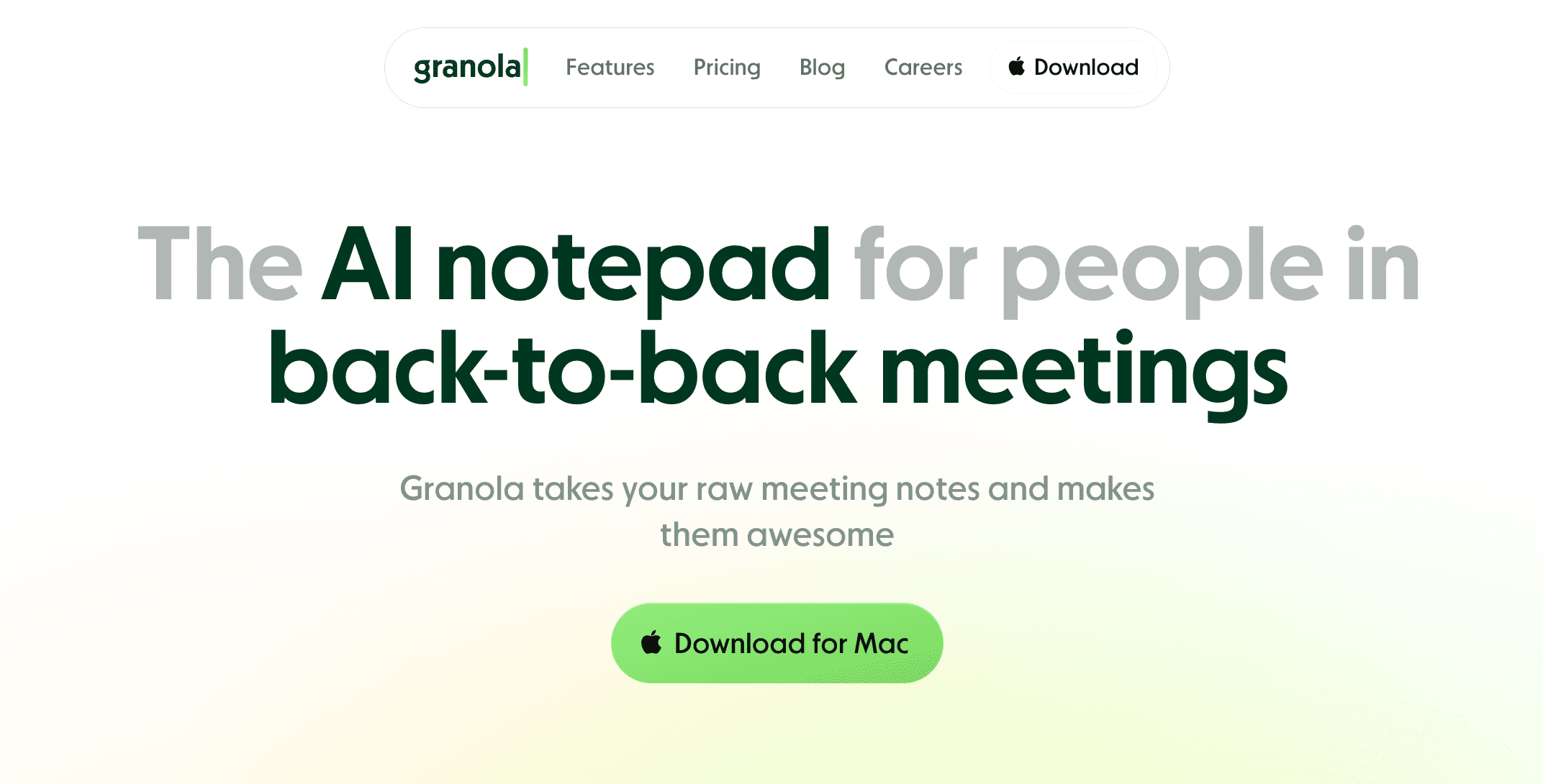
Granola is the AI notepad for people in back-to-back meetings. Following rapid growth—$63 million raised in a Series B and a team scaled to over 40—they needed GTM infrastructure to match their velocity.
The Challenge
Granola had the classic product-led growth problem: abundant product usage data, a CRM that had grown organically without discipline, and no reliable bridge between the two.
Inbound leads arrived via website forms but were processed manually, meaning qualified prospects often waited days for a response. Product usage data—who was using Granola, how deeply, which departments—lived in isolation from the CRM. The deals pipeline had become cluttered with unqualified leads, making forecasting difficult and obscuring genuine opportunities. And without a unified data model, there was no systematic way to identify expansion signals within existing accounts.
What We Built
We began with the foundation: a unified data model that brought together Stripe billing data, product analytics, and CRM records into a single coherent view. Using Polytomic, we built data pipelines that sync product usage directly into Attio, so the GTM team can now see—at a glance—active users, engagement levels, usage by department, and seniority distribution for any account.
We restructured the CRM itself, separating the deals pipeline from a new Inbound Leads object. This simple architectural change eliminated pipeline clutter immediately and improved data quality across the board. We added views, fields, and automations to track the essentials: closed dates, lead tiers, qualification status.
For inbound leads, we implemented automated qualification, enrichment via Clay, and tiering directly from the website form. Critically, we enabled auto-booking for qualified prospects—cutting speed-to-lead from days to seconds.
Finally, we built customer insight dashboards that surface expansion opportunities: accounts where usage has spread across departments, companies where only a fraction of headcount are active users, and patterns that suggest readiness for an enterprise conversation.
The Results
The transformation has been measurable. Speed-to-lead dropped from days to seconds—qualified prospects now book directly with sales, eliminating manual routing delays entirely. Daily lead triage that once consumed two hours now takes twenty minutes, an 83% improvement. Product usage, enrichment, and deal history are now visible in one place, giving the team 10× faster access to customer context.
Perhaps most significantly, inbound conversion is now trackable for the first time. Previously, many leads went untracked entirely; the team can now measure what matters. And separating deals from inbound leads removed pipeline clutter, improving forecast reliability considerably.
"The first time I saw usage data sync in Attio, I was like, damn. I felt like I had everything I needed to understand what users I should be reaching out to."— Shreman Shrestha, Head of Business
What's Next
With the data foundation in place, we're now focused on the next phase: AI-driven workflows that leverage this unified context to surface opportunities, automate outreach for lower-tier leads, and keep the sales team focused on high-value conversations.